
English| EUR
Suggested for you
More currencies
Choose a language
South of Mâcon and north of Lyon, a band of granite hills produces a red wine that spent decades misunderstood as a novelty. This Beaujolais wine guide sets out what the bottle contains, where the good ones come from, and how the region works for anyone arriving with a rental car. Entry to the region itself costs nothing — it is farmland, not a monument.
Quick answer
Beaujolais is a French red wine made almost entirely from the Gamay grape, grown across roughly 12 appellations south of Burgundy. Entry to the region is free — 0 EUR — because it is a working wine district rather than a ticketed site. Individual domaines set their own tasting arrangements, and most operate on standard business hours rather than a fixed regional schedule.
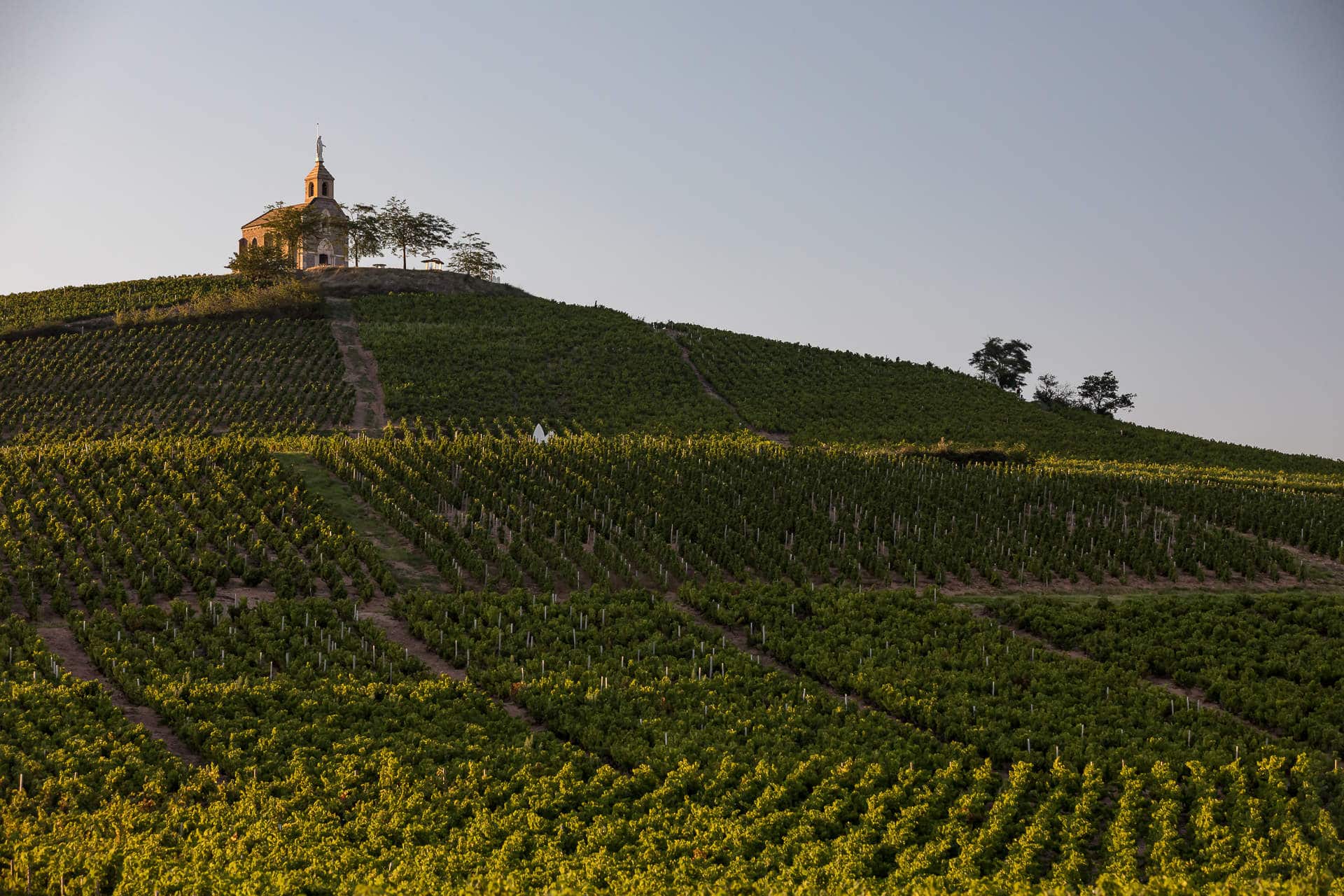
Ninety-eight percent of the vines planted here are a single grape: Gamay Noir à Jus Blanc, a variety Philippe the Bold banned from Burgundy in 1395 as "disloyal" and unfit for noble soil. Exiled south onto the granite and schist of the Beaujolais hills, it found the one terroir where it excels. That expulsion, six centuries old, explains more about what is beaujolais wine than any tasting note — the region's identity was formed by being told it was not Burgundy. The wine that results is light-bodied, high in acidity, low in tannin, and built on red fruit: cherry, raspberry, sometimes a peppery or banana note that comes from carbonic maceration rather than the grape itself. Serve it cool. The hierarchy matters more than the marketing. Plain Beaujolais AOC sits at the base, Beaujolais-Villages above it, and then the ten crus — Brouilly, Côte de Brouilly, Régnié, Morgon, Chiroubles, Fleurie, Moulin-à-Vent, Chénas, Juliénas and Saint-Amour — each a named commune in the northern half of the region, each with its own soil and character. Moulin-à-Vent ages like a serious Burgundy. Fleurie is floral and light. A Beaujolais wine tour that skips the crus misses the point entirely. Then there is Nouveau, released on the third Thursday of each November, weeks after harvest. It made the region globally famous in the 1970s and 1980s, then nearly destroyed its reputation when volume overtook quality. The recovery has been led by growers around Morgon working with old vines, native yeasts and minimal sulphur — the so-called Gang of Four and their successors. Understanding vin du Beaujolais today means understanding that reset. On the ground, this is not a single attraction with a gate and a queue. It is roughly 55 kilometres of hillside, dotted with stone villages, cooperatives and family domaines, plus the golden-limestone hamlets of the Pierres Dorées in the south. There is no admission charge to the countryside itself. Tastings are arranged domaine by domaine, which is the practical answer to what is beaujolais wine for a visitor: a landscape you drive through, stopping where the cellar door is open. The official regional site, beaujolais.com, lists producers by appellation. Plan around that, and the region rewards you.
“Exiled from Burgundy in 1395, Gamay found the one terroir where it excels — and the region has been defined by that expulsion ever since.”
This structure suits a first-time visitor coming from Lyon who wants to understand Beaujolais by tasting across its named Crus rather than at a single estate. Plan on a full day, roughly 09:00 to 17:00, covering three or four villages.
Begin at the region's main town, on the eastern edge of the vineyards, to orient yourself before heading into the hills. Twenty minutes with a map of the ten Crus makes the rest of the day easier to follow.
Head to the southern Crus around Mont Brouilly for an introductory tasting at a producer's cellar. Allow about an hour, and call ahead — most estates are small family operations that receive visitors by appointment.
Climb the Mont Brouilly track or walk the marked paths above Odenas to see the pink granite soils that define the northern Crus. Thirty to forty minutes on foot puts the tasting notes in context.
Break in Fleurie or Chiroubles, both compact enough to cross on foot in ten minutes. Village cave coopératives pour several growers' wines side by side, which is the quickest way to compare Crus.
Visit one producer in each for the region's firmest, longest-lived reds. Budget ninety minutes total, including the short drive between them.
Finish in the southern golden-stone villages, where the landscape shifts to ochre limestone. Oingt's lanes take under an hour to walk.
Wind up by late afternoon, when most cellars stop receiving visitors. Note down the estates worth a return trip while the tastings are fresh.
The period between September and November is optimal for observing the harvest and the release of Beaujolais Nouveau. Planning your visits during the morning ensures access to wineries when staff are most available.
Mild, 15–22°C
Harvest season offers active vineyard views and temperate conditions.
Cool, 8–13°C
Beaujolais Nouveau celebrations bring festivals and lively wine events.
—
Arriving between 09:00–17:00 provides the quietest tasting experiences at local estates.
Verdict: Visit between September and November during weekday mornings for a balance of seasonal activity and accessible winery tours.
Beaujolais is located just north of Lyon, accessible primarily via the A6 motorway or regional rail services. Driving provides the most flexibility for exploring the various wine villages spread across the region.
A6 motorway from Lyon to Villefranche-sur-Saône
TER regional train from Lyon Part-Dieu to Villefranche-sur-Saône
Direct transfer from Lyon city center
For the best experience, rent a vehicle in Lyon to navigate between individual estates, as public transport is limited once you leave the main towns. Aim to start your journey within the 09:00–17:00 arrival window to ensure wineries are open for visits.
Beaujolais is a wine region rather than a single attraction, meaning there is no centralized admission fee. Costs are instead determined by individual winery policies for tastings and cellar tours.
Verdict: A typical adult pays 0 EUR for regional entry, with total costs depending solely on the specific tasting fees charged by individual wineries.
Everything you need to know about what is beaujolais wine
Beaujolais wine is a French wine produced in the Beaujolais region, primarily made from the Gamay grape. Understanding what is beaujolais wine involves exploring its diverse range of styles, from light and fruity Nouveau to more structured Cru Beaujolais.
The region is open for exploration, but individual wineries operate on their own schedules. You can visit the area at your leisure to learn what is beaujolais wine directly from local producers.
To experience the region, you may book a guided excursion starting from nearby Lyon. These tours provide transport and expert insights into the viticulture and terroir that define the area.
Entry to the Beaujolais wine region is free, as it is a geographical area rather than a ticketed attraction. Visitors only pay for specific services like tastings or tours arranged at individual wineries.
The best arrival window is between 09:00 and 17:00 when wineries are typically open for business. Planning your visit within these hours ensures you can access tastings and tours at local estates.
While families may visit the region, most activities are centered around wine tasting and estate tours which are designed for adults. Ensure you verify that specific wineries are child-friendly before including them in your itinerary.
The most common mistake is attempting to visit without confirming the business hours of specific wineries. Since the region is vast, checking ahead ensures that the estates you wish to see are open.